Productivity
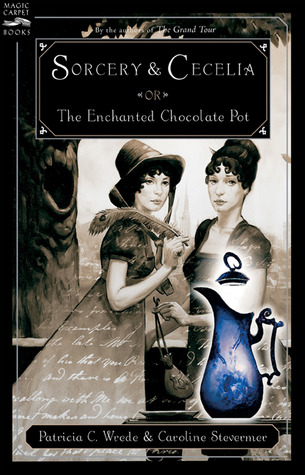
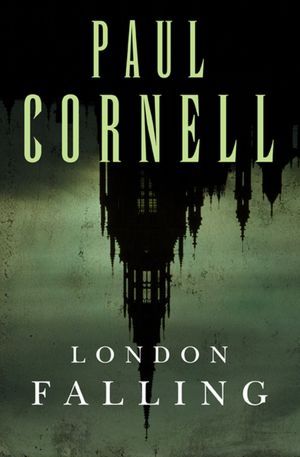
 First, I just want to remind everyone that I’m running a giveaway. The prizes are a copy of Shades of Milk and Honey by Mary Robinette Kowal, Sorcery and Cecelia by Patricia Wrede and Caroline Stevermer, or London Falling by Paul Cornell. The giveaway runs until November 17!
I wanted to talk very briefly about productivity today. I’m terrible at getting things done. I’m interested in so many things (reading, writing, jewelry making, acting, sewing, knitting, crochet, embroidery, costuming, letter writing, video games) that there is always something else I could be doing at any given moment. And that’s before you factor in spending time with other actual people.
So, I occasionally have to trick myself into getting the appropriate work done. When there are dozens of things you could be doing it can be hard to sort out what you actually need to be doing.
The two things that I’ve found motivate me better than anything else are rewards and competition. (Also fear, but it’s hard to orchestrate that for yourself.)
1. If I get x done I get a (metaphorical) cookie!
This one is a little hard for me because there’s always the part in the back of my brain saying, “I’m an adult, damnit. I can just go have a cookie.” But it will work. Especially if I’m not the one providing my own cookie. And the cookie can be almost anything; more time with a video game, new jewelry making supplies, a new book, an actual cookie, it doesn’t matter.
There are a few websites that I use to help provide me with cookies.
 Habitrpg – This is a website that gamifys good habits by treating your life like a role playing game. You get points for good habits, you lose points for not completing habits. You can also list tasks and get points and gold for checking those off. With your gold you can buy equipment. You also get pets and mounts (I’m working with a particularly purple color pallet right now.)
You can join parties and go on quests. It’s all very much like an rpg, but it’s all based around forming good habits.
The Magic Spreadsheet – This one is based solely around writing. It’s really simple. It’s a google spreadsheet that you can fill with your daily word totals. You get points for consistency, building chains, and word totals. Eventually, you can level up, which basically just means that your daily word count goal is higher. The cookie in this instance are the points. And I find it very motivating.
750words – This is another writing based site. It’s basically an external way of recording word count and getting some accountability. You load your words into their window, or you can compose directly there. For each day you reach 750 words you get a check mark. You can look at other people’s progress, but the cookie is basically just seeing that row of check marks at the top of your screen. I used this for a while, but I switched over to the Magic Spreadsheet almost exclusively now. 750 Words has no way to backdate if you didn’t have internet access on a particular day, whereas the Spreadsheet does.
2. If I get x done, I WIN!
I am very competitive. My ex stopped playing boardgames with me fairly early on in our relationship because I got mean. I played team sports briefly, but A) I was terrible and B) I really, really, really hated to lose. So competition really works for me. I don’t have to be competing against someone else, I can compete against a goal or a computer.
NaNoWriMo – possibly the most famous writing competition out there right now. You’re competing against the wordcount and the deadline. You’ve got the month of November to write a 50,000 word novel. (I’m behind at the moment because I didn’t get anything done yesterday. I got to spend time with two very awesome friends instead, so I still think I’m winning.)
You can make ‘writing buddies’ and see what their word count is, so you can kind of unofficially pit yourself against other people. The different regions will also occasionally have competitions to see whose area can produce the most words in a given period of time.
There are also great things that have grown up around NaNoWriMo. There is the NaNoWordSprints twitter feed. They challenge their followers to do word sprints – as many words as you can write in a given time period.
You can also set up competitions with your friends as long as everyone can keep it friendly. I can (mostly) do that.
These are a few of the things I use to try to keep on track. What productivity tips and tricks do you have?
New Adventure
 It’s Day 10 of #bloglikecrazy and I thought I would make an announcement. I’m going to start a book recommendation podcast.
It’s something that got tossed around at the Writing Excuses retreat and I’ve been thinking about it for the past month. It won’t be up anytime soon. I’ve still got to get equipment and learn how to use it, but I’m hoping to have it up and running before the end of the year.
I’ve still got lots of details to sort out and I’ll be looking for guests once the show is ready to start recording, so if you need book recommendations and you’d like to email in or possibly be on the show please email me at medusasmirror@gmail.com or leave a comment below.
Thanks! And wish me luck!
Baby Shower Presents
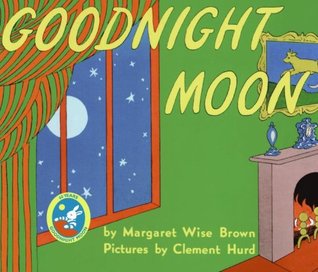 For some reason, there have been a ton of people in the store lately buying baby shower presents. So, I just wanted to give everyone a few suggestions so I can stop wrestling that copy of Goodnight Moon out of your hands. Yes. It’s a classic. And the happy parents(s) will receive at least five copies. Please, don’t be the person who makes a prospective parent come into my store with three copies of Margaret Wise Brown’s most famous picture book under their arm. (Also, as a side note, please stop making us cut out or put a sticker over the price. 1) They know how much books cost. 2) It makes it much harder for them to return the ones they don’t want or got extras of and it’s not personal like inscribing the book would be.)
So, I’ve denied you a beloved classic. What can you give your expectant friends?
Different classics!
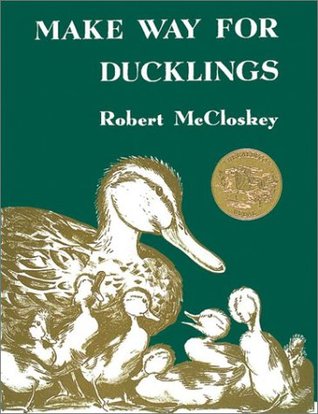
Make Way for Ducklings by Robert McClosky
This is another classic, but it isn’t given nearly as often. It’s adorable and has enough content that the parents won’t go crazy reading it over and over again. Also, who can resist a story about ducklings getting an escort through town?
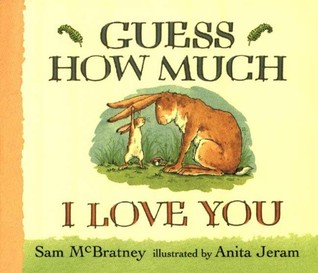
Guess How Much I Love You by Sam McBratney
Little Nut Brown Hare keeps coming up with bigger and bigger examples of how much he loves Big Nut Brown Hare, but Big Nut Brown Hare always loves him just a little bit more until they love each other to the moon. And back.

Harry the Dirty Dog by Gene Zion
Harry hates baths. He hates baths so much that he turns into a dog is family can’t even recognize!
Or, if you’re in the mood to try something new:
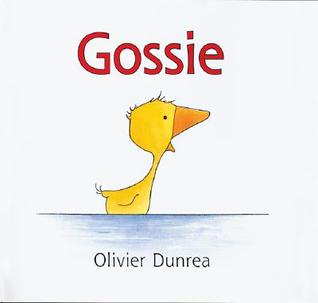
Gossie by Oliver Dunrea
Gossie is a gosling who wears bright red boots. One day she can’t find one of the boots. This leads to a quest at the end of which she finds her boot and a new friend.
There is an entire series of these books, so you are sure to be able to find one that fits your style. Also, these are all board books, so they’re a bit sturdier than the average picture book.
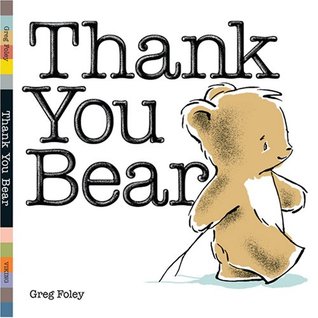
Thank You Bear by Greg Foley
Bear is trying to find the perfect present for his best friend, Mouse. But nothing is right. He asks advice from several other animals, but none of them manage to help him. Finally, he settles on something. Mouse, however, tells him that no matter what it is it will be perfect because it came from his friend.
Like the Gossie and Friends series, there are many Bear books to choose from. The illustrations are precious and the content is always sweet.
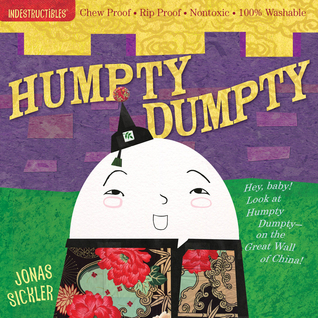
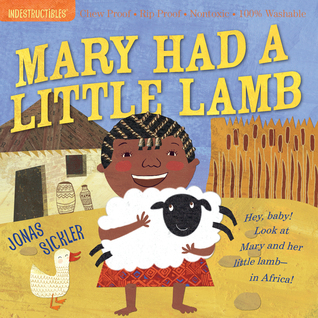
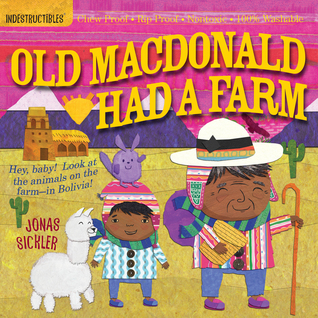
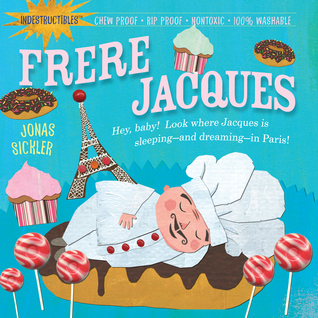
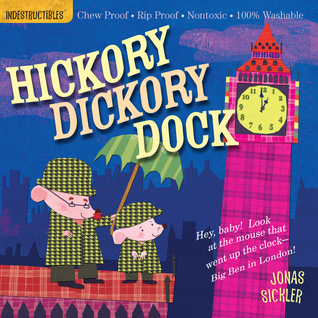
The Indestructibles Series
These books are made out of crazy space fiber (not really. It’s “a synthetic material made from flashspun high-density polyethylene fibers”) and are chew proof, waterproof, and tear-resistant. If they get sticky you can just put them in the tub with the baby!
They’re also pretty. Most of the books are wordless, but that gives you plenty of leeway to tell a story you’re interested in. And then there are the nursery rhyme books. Humpty-Dumpty is set in China. Mary Had a Little Lamb is in Africa. Hey Diddle-Diddle is in New Orleans, and Old MacDonald is in Peru!
Hopefully, this will give you a few new go-to books for those last minute baby gifts. What books do you like to give new parents?
Book Review: The Sleeper & the Spindle
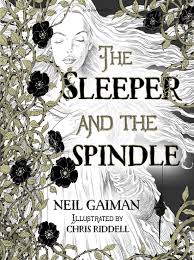 The Sleeper and the Spindle is a new novelette by Neil Gaiman with illustrations by Chris Riddell. I imported it from the UK because I couldn’t wait for it to be available here in the US. (I also got the UK edition of Shades of Milk and Honey because it has two extra chapters. I’m not obsessed. Hush.)
First off, let me just say that this is a gorgeous book. The picture to the left doesn’t even really do it justice. The picture of the sleeper is printed on the actual book cover, then there is a velum dust jacket that has the title and the roses. The vines are all detailed in gold. I can’t find a good picture of the actual cover, and my cell phone can’t do it justice either, so I’ll leave it for you to search.
As with so many things Gaiman has done, this book weaves fairy tales together. The two main stories are Sleeping Beauty and Snow White, but there are hints of Rapunzel, Red Riding Hood, and others I’m sure I’m not catching.
Three dwarves set out on a quest to get the best silks for their queen. But when they reach the neighboring kingdom they are met with stories of a plague, a sickness, a curse, a spell. People are falling asleep. Everyone knows that there is a princess asleep in the castle. She’s been there for 70 years, but everything outside the castle full of roses, on this side of the haunted forest had been fine. Until recent. The sleeping curse is spreading west at two or three miles a day.
The dwarves rush back to their kingdom to tell the Queen. She can do math and determines that the curse will reach her kingdom in a matter of weeks. So, she puts off her wedding, kisses her prince, and rides to the east. Dwarves are magical and only sleep once or twice a year, so they should be able to withstand the curse. And the Queen has already overcome one enchanted sleep, so she should be fine too.
This story leaves the Princes behind. In fact, Snow White’s prince is patted on his “pretty face” and never thought of again. This book breaks conventions, while still being very much a classic fairy tale. It was noticed by several media outlets for this picture: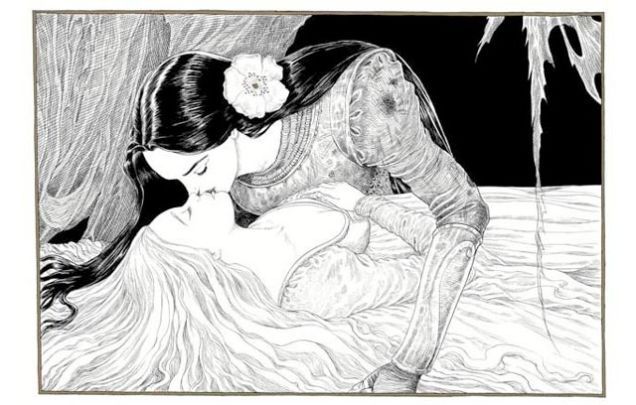
That’s Snow White waking up Sleeping Beauty with a kiss. It ties nicely into this year’s other non-traditional Sleeping Beauty kiss (Spolier) in Maleficent. Now, I will say that the picture is slightly misleading. This could be considered a SPOILER, so I’m going to ramble on for a bit in case you don’t want to see SPOILERS to give you time to click away from this page.
There is not a happy, lesbian romance between Snow White and Sleeping Beauty. I just want to get that out there. So if you’re really excited about that or deeply offended by it, either way, bring it back in, because that’s not the direction this story goes. The kiss is more or less out of pragmatism. The Queen is the most logical person in the party (consisting of herself and three dwarves) to break the spell.
Ok, now that that’s out of the way. I liked this story. I liked it very much. This is very much the story of the women involved. The dwarves are there, but they’re support. The Prince is barely a footnote. It’s beautifully illustrated and beautifully written. I can’t recommend it enough if you like fairy tales. The Queen (she’s never actually called Snow White in the book) takes agency. She is the Queen. She must go face this threat to her kingdom, but she also uses the quest as a way to reset her life, which is spinning slightly out of control.
Another warning that is really more like a reminder. Neil Gaiman wrote this. You know, that guy who writes the things. Don’t look for a standard fairy tale ending from this book. It’s a satisfying ending. It’s a meaningful ending. It’s a beautiful ending. But it’s not a promise of “Happily Ever After.”
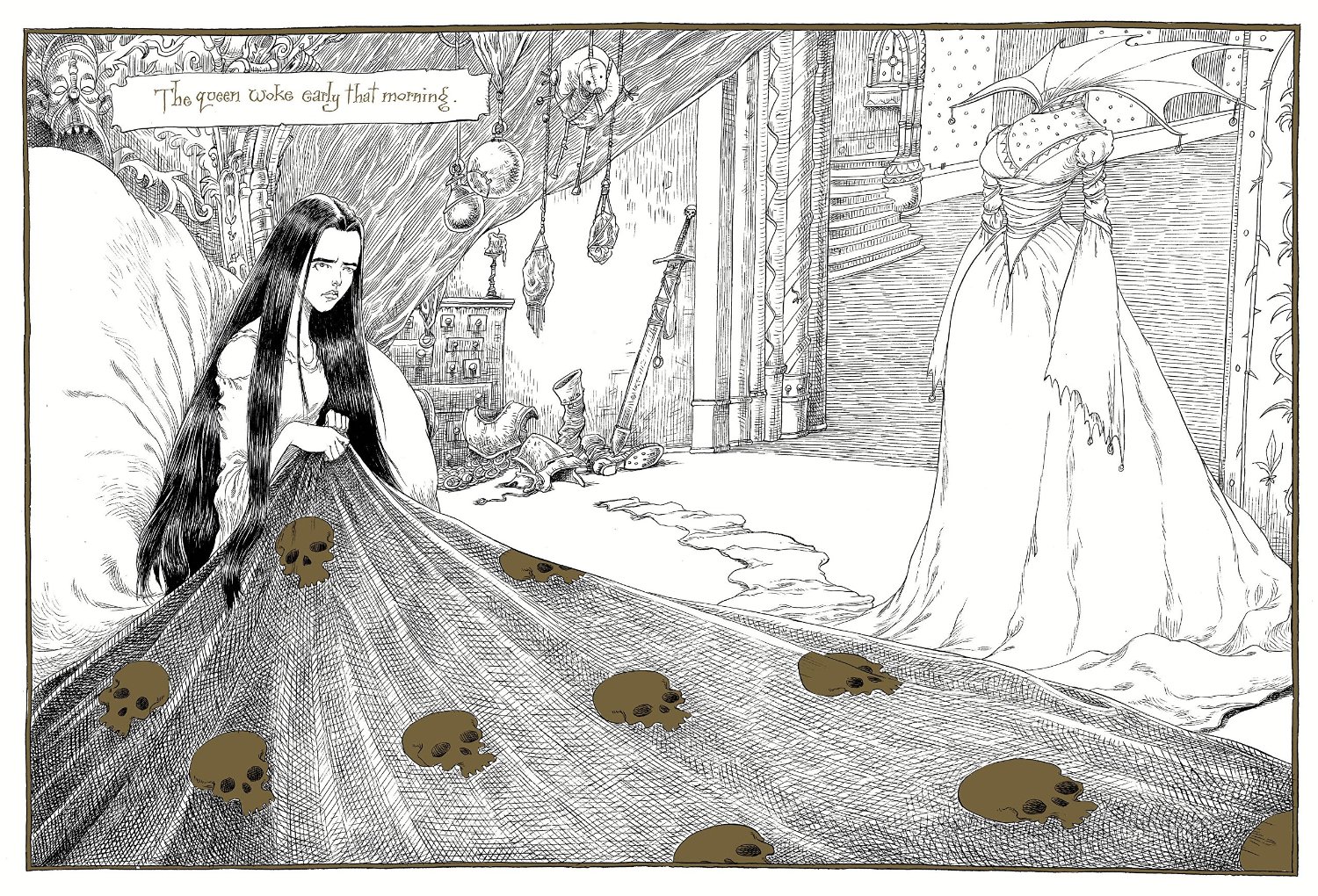 I can’t say enough about Chris Riddell’s illustrations. He has a very definite style, which is very much in evidence here. The illustrations are all elaborate black and white drawings with gold embellishment. They’re just breathtaking. There are tiny details in all of the pictures that make you want to just sit and stare at a page for ages. One of my personal favorite pictures is that of the Queen in bed. She has gold skulls all over her coverlet. That just seems so perfect for Snow White. Sleep is a short reprieve from death for both these women. The skull motif carries on with the Queen’s armor. They aren’t leering skulls or demon skulls. They’re just small reminders. It’s just lovely.
Also, I now really want to cosplay Snow White from this book.
Jonathan Strange & Mr Norrell Chapters 23 – 26
 Chapter 23: The Shadow House
Mr Segundus is back!
We finally have mention of a woman magician. Well… sort of? Apparently Maria let the house go to ruin to increase its magic, but the narrator does not tell us of Maria actually doing any magic.
Miss Abaslom sounds like she looks quite a bit like Queen Elizabeth. I don’t remember many portraits of English ladies with red hair except Elizabeth. Red hair was not, as far as I can tell, very fashionable.
Why would Norrell need four copies of The Language of Birds except that he wishes to keep anyone else from having it?
Mr Strange comes across at first as very cross, but settles back down into something much more amiable. I do wonder, however, what happened to Miss Woodhope. He does not seem to be married to her, despite it being some time now since his father’s death.
I do not think Mr Norrell will be at all pleased to have Mr Strange come on the scene.
Chapter 24: Another magician
It seems very typical that Lascelles wouldn’t know a man by his name, but would remember a prank he pulled at school.
Oh, apparently Strange is married.
It’s funny that Norrell wants to read Strange’s writing when he himself never produces anything.
Strange is shaking things up from the very first; attacking an article expressly approved by Norrell, casually mentioning the great lack of books when everyone knows that Norrell is hoarding them all.
I think Mr Norrell hates the Raven King, not because he stole half of England, but because his name will always be greater than Mr Norrell’s own.
Giving someone a book and then telling them what they are supposed to learn from it… how thoughtful.
Oh, well done, Mr Strange. You did a piece of magic, got rid of an unwanted gift, and complete won over Mr Norrell. Although, I don’t think the apprenticeship will be a peaceful one.
Chapter 25: The education of a magician
“…best of all, one need not so much as look upon another of one’s fellow creatures from one month’s end to the next if one does not wish it!” -Norrell really isn’t a people person, is he?
What has caused all the gaps in Norrell’s library? Is it something like the books that Segundus and Honeyfoot couldn’t remember? Or is it a bit of the Emperor’s New Clothes? Everyone knows Norrell has a great library, so the gaps are ignored?
“What have I ever done that has needed the help of a fairy?” – is he ignoring or forgetting the thistledown-haired man?
I think we have all encountered a situation similar to that of Strange and Norrell; a friendship where one party is much more invested and happy than the other. Those usually don’t end well.
I’m not sure that this is the world’s longest footnote, but at 5 pages, I think it’s a contender.
The story of the Master of Notthingham’s ring is very fine, but the tiny addendum at the end is the most notable. The story without the ring and without the rivalry tells instead of two woman, Margaret Ford and Donata Torel, who form a fellowship of women magicians. The Master of Nottingham hates it and tries to destroy it, leading the women to flee into the woods and the protection of a greater magician. But, of course, that’s not the popular version.
The gaps in the library explained! Norrell is still hoarding knowledge, even from his hand-picked pupil.
The nightmare scheme is interesting, but Norrell’s nightmares are very sad and small. I’m surprised it was Dragoons in the wardrobe rather than mice. Although, an illusion of mice in the walls as you’re trying to sleep might be efficacious.
I love the idea of having novelists write nightmares!
Sending dreams to Alexander of Russia seems quite clever. Napoleon was not one to turn aside out of fear of dreams, but his allies were never as driven as he. Alexander flip-flopped back and forth repeatedly during the wars as it was.
Chapter 26: Orb, crown and sceptre
The monotony of the music and the decayed state of the house remind me of various other fairy stories in which the fair folk look to humans for inventiveness and creative thinking. Or stories in which all the fairy glamour turns to leaves and ashes in the morning. It seems like the Thistledown man’s house is caught halfway between.
“He always took great care not to speak to, or in any way acknowledge, negroes of low station. He feared that if he were seen speaking to such people it might be supposed that he had some connexion with them.” – and the first thing I have found out about Stephen Black that makes me sad.
Is Johnson in his black ship hat an omen? Black ships are not, typically, considered lucky. The hat reminds me of one from Plunkett & Macleane; hat with a skeleton on a gibbet on top.
Jonathan Strange is perhaps not quite so stupid as Mr Norrell when it comes to perceiving the fair world. He can hear them talking about him after all.
And, lest we forget that the man with the thistle-down hair is amoral and scary, we have the mention of throwing children off the belfry.
Happy Birthday, Dad
As you might guess from the title, this is going to be another personal post. If that’s not your bag and you’re just here for the books, I totally understand. I’ll see you tomorrow for another look at Jonathan Strange and Mr Norrell.
 Today is my Dad’s birthday. What you might not know if you don’t know me personally is that Dad passed away four years ago. The anniversary is also in November. That’s part of the reason I try to stay so busy this month, it’s a rough one for me.
Today, I want to tell you a little bit about my Dad and what I’m doing today.
Dad was unique. I think all people are special in their own way, but I’ve really never met anyone quite like my Dad. As my friend Benji puts it, “Arthur was a unicorn.” He would have liked that.
First of all, my Dad was, at one point, a butler. Yep, I got to go to school and tell other kids that my Dad buttled for a living. And then refuse to tell them what that meant. (I was a snot.)
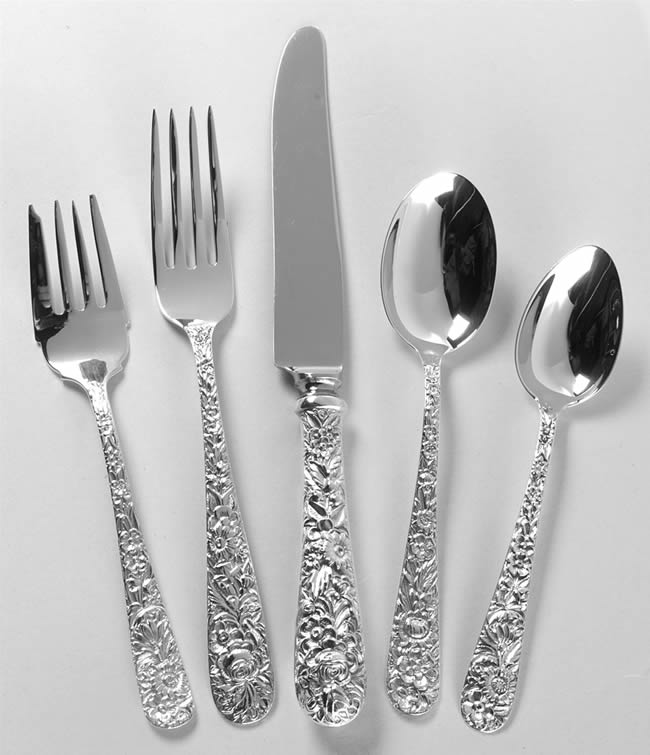 Next, my dad was a very snappy dresser. He had shoes like Imelda Marcos had shoes. His closet was arranged by color and he had a custom built tie rack. He liked china, and crystal, and silver. He had full service for twelve in his silver pattern, repousse. It’s one of the most ornate patterns you can get these days. And that should tell you something about my father.
He was gay. It wasn’t ever a really big part of our lives. He never introduced me to a boyfriend. I didn’t even know for sure until I was seventeen. I’m not sure why he didn’t tell me before, but he didn’t. He was always looking for “the one,” but he was pretty sure that he’d had him and lost him back in the ’70’s. That’s a hard thing.
My Dad liked things that were expensive, elegant, and French. Or at the very least English. American was ok, but French was always better. He loved Martha Stewart and Ina Garten. He cooked amazingly well and actually owned a catering business at one point. The thing I remember most about that was filling the pastry puffs because I had the smallest hands.
The most meaningful thing my father ever said to me was that he loved me more than his luggage. (He collected Louis Vuitton, so that was a pretty important thing to tell me.)
I’ll talk about his death some other time, but today I want to celebrate his life.
 He wasn’t always the easiest man to be around. He was bi-polar and unmedicated for most of my childhood. That was problematic. But he was amazing at making these huge, lavish gestures for people who don’t get them often enough.
He once bought barbecue for the entire staff at Fresh Market because there was a fundraiser for a cancer charity outside that day.
He used to bring the baristas at his Starbucks breakfast from somewhere else because he assumed they were tired of what they had.
He bought his dogs sausage biscuits ever morning and took Godiva chocolates to the folks at the store where he got his watch repaired.
 When I turned fifteen he was running an assisted living facility in Florida. He got ever single resident to send me a birthday card. I got three USPS tubs full of mail on my birthday at boarding school.
He didn’t know how to do things small.
This year, I don’t have time to take the day off and have a celebration. I’ve done that a few other years, but I think Dad would approve. I’m going in to work at the school where I’ll check out books to kids and have a story time. Then, tonight, I’m going to be participating in the Birmingham Art Crawl, selling my jewelry. Dad always loved a good piece of jewelry. If I’ve got time, I’ll slip down to the Urban Standard and pick up a cupcake. I’ve got some candles at home and I know just the wish he’d make.
Review: The Tightrope Walker by Dorothy Gilman
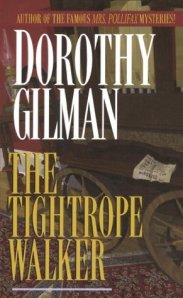 I adore Dorothy Gilman. The Mrs. Pollifax series is one of my absolute favorites. It’s right up there with the Aunt Dimity series in terms of comfort reading. I’ve been branching out lately (because I’ve read all the Mrs. Pollifax books several times) and reading some of Dorothy Gilman’s standalone books.
The Tightrope Walker is the most recent book I’ve picked up. It’s set in the same city as The Clairvoyant Countess, which made me smile.
Amelia Jones has had a difficult life. Her mother died when she was eleven. Her father passed away when she was eighteen, and she has been under the benevolent eye of her psychiatrist for the last several years. At the beginning of the book, Jane comes into her majority and uses some of the money to buy the Ebb Tide Shop, a little curio cum junk shop full of things like carousel horses, imported bathrobes, and cuckoo clocks. Among the other things there is a hurdy gurdy that Amelia decides to keep for herself.
Everything seems fine until she does some minor maintenance and finds a terrifying note. The note is from a woman named Hannah who writes that she has signed a paper and knows that they will kill her soon. Amelia becomes obsessed with finding out what happened to Hannah and sets out to trace the hurdy gurdy back to its original owner.
This is a delightful book. It’s slightly dated, but that just adds to the atmosphere. Gilman has always done a good job of not putting in too many things that feel ridiculous to later readers. Amelia is a charming girl who is going way outside her comfort zone to try to solve this mystery.
There is, inevitably, a romance. This time it’s with a graphologist named Joe who she consults about Hannah’s note. There is refreshingly little drama about the whole thing, which I loved. It was somewhat palate cleansing after the soap operas of my Marion Chesney books.
The mystery is well crafted and suspenseful.
I’m listening on audio and highly recommend that version.
Marion Chesney
Lately, I’ve been reading a TON of books by Marion Chesney (a.k.a. M.C. Beaton). Audible either just them or just started recommending them to me. Either way, I’ve listened to five of her books in the last month. On the whole, I quite like them. Most of the books keep it to about a PG-13 rating, so they’re more akin to the Georgette Heyer style of romance. Sex is occasionally acknowledged, but not described.
Marion Chesney also has some Edwardian murder mysteries that I read quite some time ago. They’re not my favorites, but they are a rather good compromise between the cozy and the historical mystery. They’re not rigorously accurate, nor are they terribly complex mysteries. It’s been lone enough since I read them that I won’t try to review them here.
A House for the Season
I’ve mentioned the first two books in this series already. As I mentioned in the previous post, this series centers around a house in London situated at #67 Clarges Street. The staff is trapped by the estate manager who is blackmailing the butler and the footman with previous indiscretions and simply refusing references to the rest of the staff. He charges the owner high rates, but pays the staff barely enough to live on, forcing them to rely on the generosity of any seasonal tenants the house might attract.
However, the property is considered unlucky and in gambling mad London that is practically the kiss of death. The previous owner, the Duke of Pelham hanged himself there, and two previous tenants were ruined. The son of the first tenants lost all their money gambling while the daughter of the next tenants died under mysterious circumstances. So, only the people likely to rent the house are either desperate or pathetically clueless.
The books are much of a muchness. The girl finds her man, the servants help, but cannot manage to break away from the odious Palmer despite receiving help from the various tenants. But, they are fun, escapist literature. I would not, however, recommend emulating me and reading quite so many back to back.
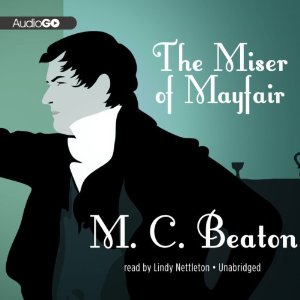 The Miser of Mayfair is the first book in the series.
Mr Roderick Sinclair is on the point of hanging himself to avoid the workhouse when he receives the news that his disgustingly rich brother has died. Sure that his troubles are over he trots off to the lawyer’s only to find that rather than leaving him any money, his brother has left him a ward. Fiona Sinclair is stunningly beautiful, but not, on the surface, terribly bright.
Mr Sinclair lands upon the scheme of taking Fiona to London and marrying her off to a fabulously wealthy man, thus setting them both up. However, he has no money for a London season. Fiona hits upon the idea of saying that he is a wealthy miser with a heart condition. This will explain why their things are shabby and they throw no parties, while at the same time making everyone assume that she is an heiress.
Fiona sets her heart on marrying the Earl of Harrington, who is notoriously unapproachable. However, she intrigues him. She is a contradiction between seeming to say just what she thinks while coming across as innocent and slightly stupid to most of the ton.
It’s an entertaining book and it can be delightful to see the way Fiona plays with everyone. The Earl seems to vacillate back and forth between rather a bastard and a reasonable man. I certainly wouldn’t want to marry him. One problem with many of Chesney’s heroes is that they are a bit too aggressively unapproachable. They’re not very nice people and I don’t buy into the “love of a good woman will reform him” shtick. So, while I enjoy the stories, I also find many of them problematic. The Earl spends a fair amount of time accusing Fiona of being an adventuress and seems all too ready to believe the worst of her without actually hearing her side. (This comes up in other books as well.) If you can read relatively uncritically though, this series is fun.
I quite like the servants, who are the backbone of the series, although they also have their flaws.
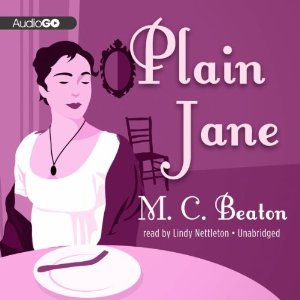 Plain Jane
This time we have a perfectly respectable family, although the mother, while not quite a miser, is careful with a coin, hence why they have taken #67. The family has two sisters, Euphemia who is as lovely as an angel and Jane who is considered too plain to be worth bothering with. This leaves her time to pine after Lord Tregarthan, one of London’s exquisites, and to investigate the mysterious death of Miss Clara Vere-Saxton, the young woman whose death helped give #67 its bad reputation.
Lord Tregarthan, through the machinations of Rainbird, the butler, meets Jane before he meets Euphemia. He becomes intregued with the quieter sister as compared to the outrageous flirt that is Euphemia. He agrees to help Jane in her detecting as a lark.
This entry into the series is fairly uncomplicated. There are various machinations which make the family fashionable or unfashionable, but none of them are problematic for me. They all have to do with the behavior of Jane’s mother and sister. Lord Tregarthan, while not the most intellectual of gentlemen, is, nevertheless, kind.
 The Wicked Godmother
Harriet Metcalf is young, poor, and beautiful. Which is why tongues start wagging in her small village when Sir Benjamin Hayner makes her not only the godmother of his twin daughters, but the manager of his estate until their twenty-fifth birthdays. The gossip is especially vicious since it comes from the two girls themselves. Of course everyone has to believe the terrible things about Harriet when the girls’ own maid is the one telling them!
Not knowing anything about the girls’ real feelings for her, Harriet takes them to London for the season where she catches the attention of not one, but TWO eligible men.
Lord Vere and the Marquess of Huntingdon are both enchanted by the pretty chaperon. Harriet has no idea that they’re both interested in her and thinks that they are paying court to her charges instead.
This is the volume I have the most trouble with. First of all, Harriet seems almost willfully naive. She’s supposed to come across as sweet, but it gets a bit annoying at times. Second, this is the other book I had in mind when I talked about the love interest being much too quick to believe ill of our heroine. The Marquess of Huntingdon has some sort of tragedy in his past where a woman betrayed him, so when the twins start up gossip about Harriet he accepts it with no hesitation. And, in fact, quickly becomes the sort of man I wouldn’t want anywhere near a friend of mine. The fact that he comes around does not, in my mind, make up for his previous behavior.
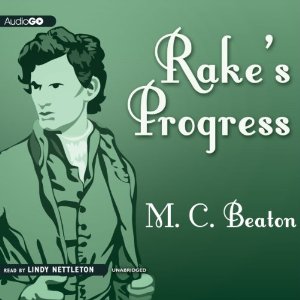 Rake’s Progress
This is the first book where the gentleman takes the house at #67 rather than a lady. Lord Guy Carlton is recently invalided from the war against Napoleon and is determined to make up for lost time with wine, women, and song. Mostly wine and women though. He throws a party full of prostitutes on his second night in the house, insults Rainbird, and terrifies the maids. But, he is not actually a terrible man. Once he learns that the pretty maid does NOT want to scrub his back, he leaves her alone. He gives the staff bonuses to make up for having to clean up after the party, and promises to take his amusement elsewhere in future. He also has accidentally found the woman of his dreams. By walking into her house, dead drunk, in the middle of the night and trying to kiss her. Not the best first impression.
Miss Esther Jones is possibly the richest woman in London. She speculates on the Change, invests her money wisely, and spends very little of it. She lives a completely quiet and retired life in town, as far away from the scandal her dissipated father left behind as she can get. He was a rake of the first order and so she has a horror of the breed. It will take all of Rainbird’s considerable intellect to get these two together.
This one was fine, but I was getting a little burned out by this point. There were a few too many instances of willful misunderstandings, but most of them were over fairly quickly.
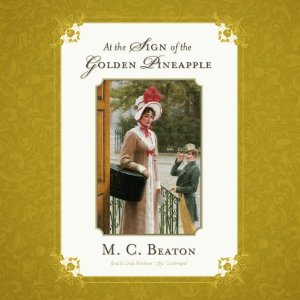 At the Sign of the Golden Pineapple
This is from a completely different series.
Henrietta Bascombe is an impoverished gentleman’s daughter who has inherited a small fortune. Rather than doing the proper thing and using it as a dowry for herself, Henrietta has determined to go into trade by opening a confectioners shop inLondon. And, to make matters worse, she has taken three other gentlewomen with her. There is her housemate and former school teacher, a young, beautiful army widow of good family, and the local squire’s daughter who is tired of being beaten whenever the mood strikes him.
The other three women are only in it until they can raise enough money to have dowrys in the younger ladies case and a “proper funeral” in the older’s. Henrietta, on the other hand, wants to be rich; filthy, stinking rich.
The Earl of Carrisdowne is concerned. His best friend, younger brother, and sister are all under the sway of Bascombe’s the new confectioners. His sister is growing fat on their sweets, while his friend and brother seem to have fallen for the wiles of the two pretty shop girls. Carrisdowne does not believe that they could be actual gentlewomen and sets out to close the shop down, thus pitting himself directly against Henrietta.
I’ll be honest. I quit this book before the end. The Earl was too much of a bastard while Henrietta seemed underdone and limp. Carrisdowne, because he disapproves of the way other adults spend their time, sets out to close down the shop, without a care as to the livelihood of the four women who work there. Then, when that doesn’t work, he plans to make Henrietta fall in love with him so he can dump her and make her close the shop due to embarrassment and a broken heart. What a prince.
Henrietta, on the other hand, declares that she has no interest in marriage and then turns around and decides to marry Carrisdowne as soon as he shows a healthy interest. The whole book would have been over much sooner if not for the machinations of Henrietta’s servant and the spoiled young woman who wants to marry Carrisdowne herself. I quit just as the servant was about to say something terrible about Henrietta to Carrisdowne. I just couldn’t handle one more scene of elaborately orchestrated betrayal.
Maybe if you haven’t glutted yourself on Regency romances you might like this one. The Goodreads reviews seem to run the gamut.
150 Follower Giveaway!
It’s day 3 of #bloglikecrasy and I’ve got an exciting announcement:
Yesterday I passed 150 followers on the blog! This is really exciting for me, so I thought I would do a giveaway. I am going to run this one for two weeks, so we’ll go from today until November 17.
Since this is to celebrate my blog I’m going to give away some of my favorite books!
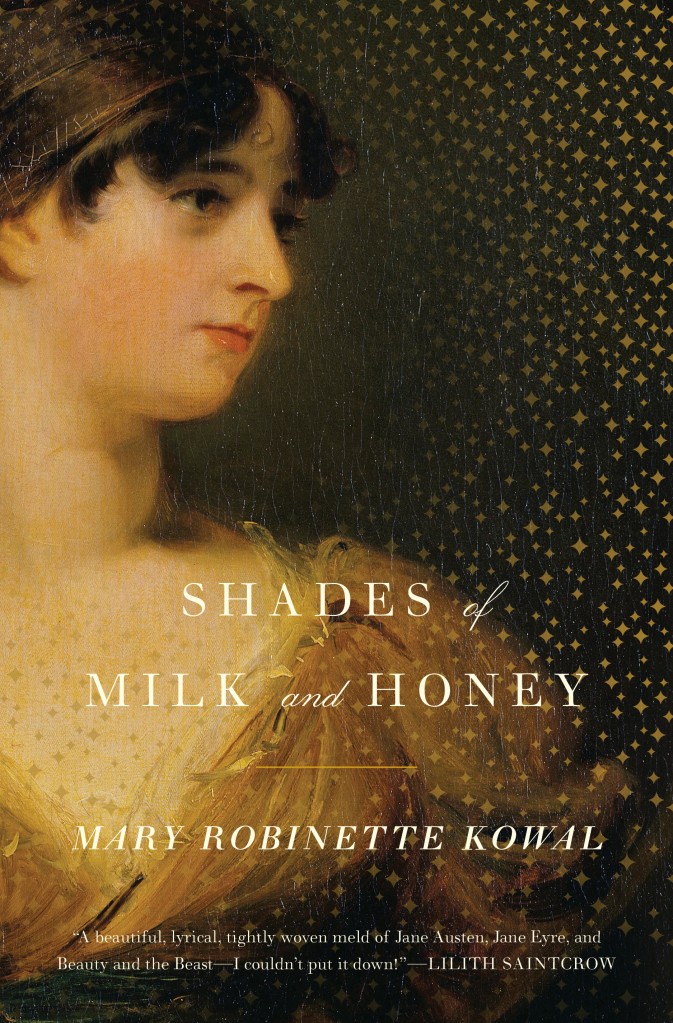 First we have a hardcover copy of Shades of Milk and Honey by Mary Robinette Kowal
The elevator pitch for this one is Jane Austen. With Magic!
If you’ve been following the blog for long, you’ll know that I adore Mary’s writing and I absolutely love this book. This is the first book in the Glamourist History series and is the most faithfully Austonian.
Jane Ellsworth is the plainer, though more accomplished of two sisters. She has a great gift for glamour, a skill without which no Regency lady can truly be said to be accomplished. Jane lives very comfortably with her parents and sister. There is some hope of an attachment forming with the eligible gentleman next door. All seems right with the world. But the addition to the neighborhood of a handsome young man, and an unprepossessing Glamourist soon turn Jane’s world upside-down.
Second, we have the very first Regency Fantasy I ever read, which is sadly, becoming hard to find again, Sorcery and Cecelia by Caroline Stevermer and Patricia Wrede
My original copy of this book is from 1988, although I did not discover it until much later. It was out of print for some time, which caused me to hoard used copies like a bookish dragon.
Kate and Cecelia are two cousins who live in a world where magic is a known and accepted quantity. Kate has gone to London for the Season and accidentally foiled a plot against a rather attractive young man, leaving her a new target. The only way they can work on the problem together is by pretending to be engaged. Cecelia is home in the country trying to cope with her own magical problems, with varying degrees of success.
The whole book is written as letters back and forth between the two cousins, and indeed, the book itself grew out of a version of The Letter Game played by the two authors.
Third, something completely different! My ARC of London Falling by Paul Cornell.
Now, this is an ARC, so it won’t be all pretty like the picture. Sorry!
London Falling follows Inspector James Quill, who is just about to make a career defining bust when his suspect is murdered. While in police custody. In seemingly impossible circumstances. Quill pursues the investigation down the rabbit hole and is soon dealing with a side of London that makes no sense. How do you arrest a being that can bend space and time? And, much like Neil Gaiman’s Neverwhere, once you slip into the other London, you can never really go back. You cannot unknow what you now know, and once you can see them, they can see you.
Click on the LINK to enter the giveaway!
Jonathan Strange & Mr Norrell Chapters 17 – 22
Chapter 17: The unaccountable appearance of twenty-five guineas
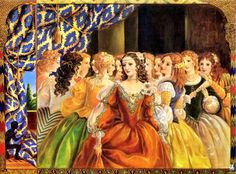
Twelve Dancing Princesses by Kinuko Craft
As I’ve said before, the level to which people just accept strangeness puzzles me. Mrs Brandy isn’t remarking on the fact that the twenty-five guineas are glowing. She’s just trying to sort out where they came from.
Yay! More of Stephen Black.
I think it must be the recent Marvel announcement, but I’m seeing Stephen Black in the guineas’ light as T’Challa.
Lady Pole is ill with aches and icy skin. Stephen Black is ill with aches and pains. It’s very Twelve Dancing Princesses.
The segment where Stephen collides with the stout man seems eerily topical. The man only sees that Stephen is black and immediately fears for his valuables and reacts violently. And Stephen has been afraid of a moment like this all his life.
Stephen is saved from the stout man when the man becomes a tree and Piccadilly turns into a magical wood. Did this happen because Stephen was in danger or just because it was a certain time of night?
Chapter 18: Sir Water consults gentlemen in several professions
Lady Pole’s hatred of dancing now reminds me of the scene in “Hocus Pocus” where the Sanderson sisters have cursed the adults at the party to dance until they die.
Mr Baillie infuriates me. There have been reports lately (and I can’t find the correct sitations right now) that women are often dismissed, disregarded, or misdiagnosed by doctors. Women’s heart disease is routinely under-diagnosed, partly because women’s heart attack symptoms are different, more like flu symptoms. Mr Baillie’s insistence that Lady Pole is having a temper tantrum rather than suffering from something feels consistent with this sort of benign medical disregard.
Poor Sir Walter, who does not like magic and yet is surrounded by it.
And Norrell finally starts to figure out how the man with the thistledown hair twisted the bargain.
“What is the fat of one young woman compared to the success of English magic?” Thanks Norrell, it had been a while since you reminded me you were an unfeeling bastard. Glad that’s cleared up now.
Poor Lady Pole, her fate seems very dark right now.
Chapter 19: The Peep-O’Day-Boys
And poor Stephen Black! To have what sounds very like a massive depression and yet still to have to drag yourself up and to work and to wait on people. The brotherhood of melancholia that is forming between Stephen and the cook is almost touching, but there’s something twisted about the cook being so “quick to welcome Stephen.”
The thistledown man’s description of London certainly has lots of confinement; griffins and lions in cages, saints in ivory caskets and jeweled coffins. They’re trapped just like Stephen and Lady Pole. Norrell bargained away Lady Pole, (regardless of whether he had any authority to or not, but somehow the thistledown man has also ensnared Stephen Black.
The thistledown man seems to genuinely care for Stephen Black, but I cannot trust him.
The dark memory sounds like a slave ship. Was Stephen there once or is the thistledown man making him remember something an ancestor experienced?
Is the thistledown man angry at Lord Pole because Norrell accounts him so important?
Chapter 20: The unlikely milliner
I like the idea of Norrell trying to glorify himself and being told to train other magicians so that he is no longer the lonely figure standing up for English magic.
“Nothing could be less to his taste than the creation of other magicians.” Well, how does he expect to cause a rennisance of English magic if he is the only one allowed to handle it?
It entertains me that Childermass likes Vinculus. They seem contrary in complimentary ways.
Chapter 21: The Cards of Marseilles
 The footnote about King George and the princesses was great.
Norrell has paid great prices for books. He has also ruined men to take their books.
What hold does Norrell have over Childermass? It seems like such a man would not stay in the employee of Mr Norrell simply out of need for a job.
So, the cards of Marseilles (after some wikipedia-ing) are tarot cards. Good to know. I suppose the narrator does not include a footnote since this would be common knowledge to her readers. Granted, turning the page would have told me that too.
Norrell is like a child denied a sweet. He wants that book just because he is told he cannot have it.
Vinculus was, “a great deal more married than most people.” – that’s a brilliant line.
Chapter 22: The Knight of Wands
Jonathan Strange is now on the scene. It’s about time!
Long nose, ironic expression, and red tinged hair… did they order him specially for me?
“Sometimes it seemed as if she had fallen in love with him for the sole purpose of quarreling with him.” I’ve met those couples.
Enter the Knight of Wands.
What do the blue tattoos on Vinculus’s neck mean?
Strange has bought Norrell’s spells from Vinculus. Oh what a tangled web we weave…
Jonathan Strange has decided to become a magician to impress a young lady. Well, people have done stranger things for love. I ended up majoring in Russian because of a certain attractive young man.
Apparently, Mr Norrell is Mr Strange’s enemy. Which fits what we have learned of Mr Norrell’s character.
And here we come to the end of Volume I. I don’t really like anyone except Stephen Black and Mr Segundus so far. Mr Norrell is horrid. Lady Pole isn’t really a fully fleshed character at the moment. Lord Pole is mostly sweet, but slightly problematic. And Mr Strange is very odd. So, we shall see what there is to see in Volume II next week.



 Medusa's Library